Equipment fails. Circuits remain live. Valves leak. And when someone opens a panel or starts a machine without verifying it’s safe, the consequences can be catastrophic. Yet in thousands of facilities, the most overlooked defense against electrocution, amputation, or worse isn’t a high-tech sensor—it’s a sign.
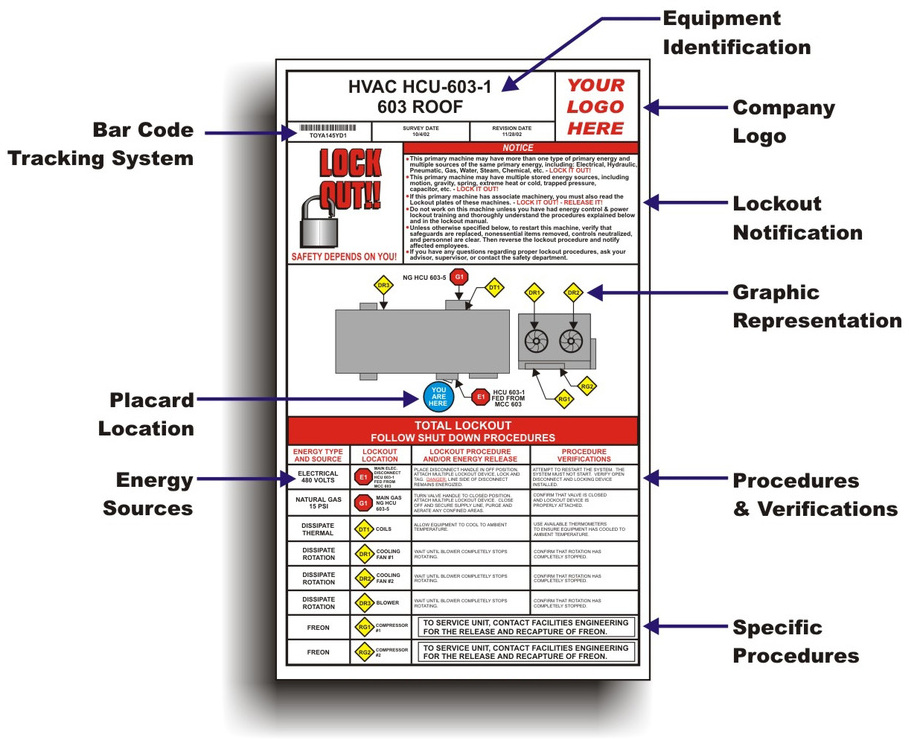
Lockout tagout signs are more than labels. They’re a critical communication layer in energy control procedures. When properly designed and placed, they alert workers to danger, reinforce compliance, and help meet OSHA’s strict LOTO regulations. But too often, they’re slapped on haphazardly—generic, faded, or ignored—turning a safety tool into a compliance checkbox.
This is about making those signs work.
What Are Lockout Tagout Signs (And Why They’re Not Optional)
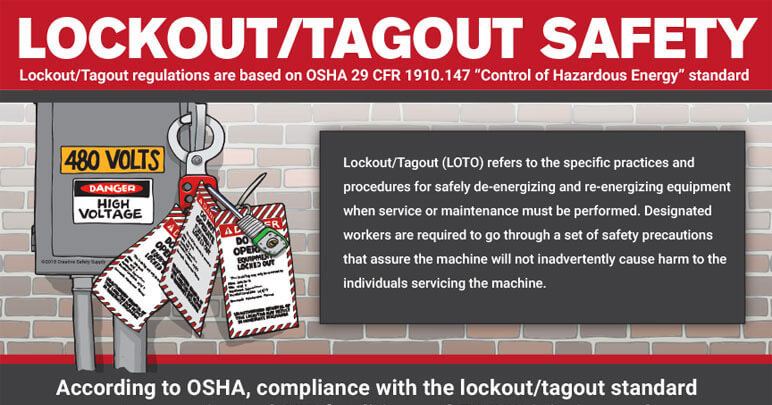
Lockout tagout (LOTO) signs are visual warnings used during maintenance or repair to indicate that machinery is isolated from hazardous energy sources. They accompany physical lockout devices—like padlocks or valve locks—but serve a distinct purpose: communication.
While a lock prevents operation, a sign explains why it’s locked, who is responsible, and when it became secured.
OSHA standard 1910.147 requires that workplaces implement a formal energy control program. This includes: - Written procedures - Authorized employee training - Periodic inspections - And yes—clear signage
Without signs, even the best lockout process breaks down. Imagine a night-shift technician seeing a locked conveyor belt. No sign. No name. Should they remove the lock? Restart it? Without context, assumptions take over—and mistakes happen.
The Difference Between Lockout Tags and Lockout Signs
A common confusion: lockout tags vs. lockout signs.
They’re both part of LOTO, but they function differently.
Lockout Tags
- Attached directly to the lock or energy-isolating device
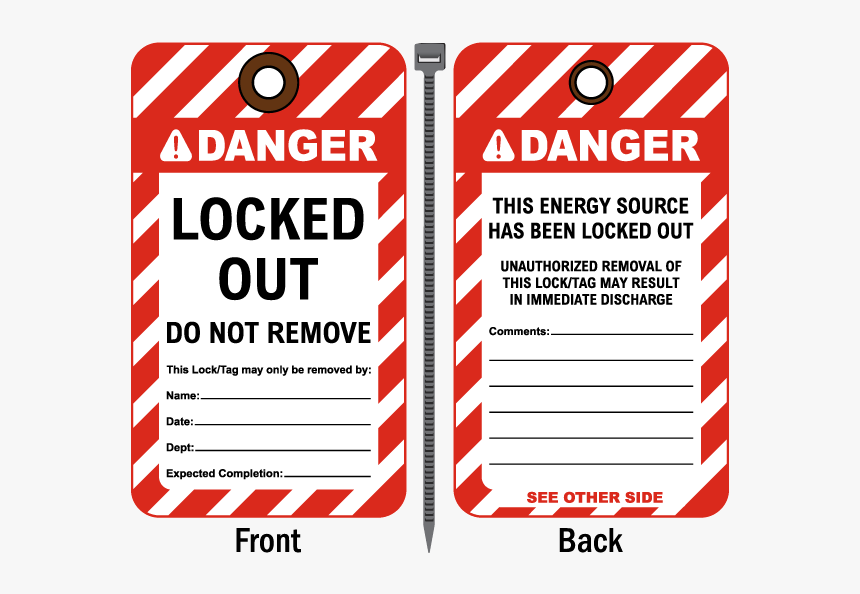
- Personalized (name, date, department)
- Explain who is performing the work
- Often tamper-resistant and non-reusable
- Required by OSHA for every lock applied
Lockout Signs
- Fixed or semi-permanent
- Located near equipment or lockout points
- Provide general warnings or procedural reminders
- Reinforce policies, not personal accountability
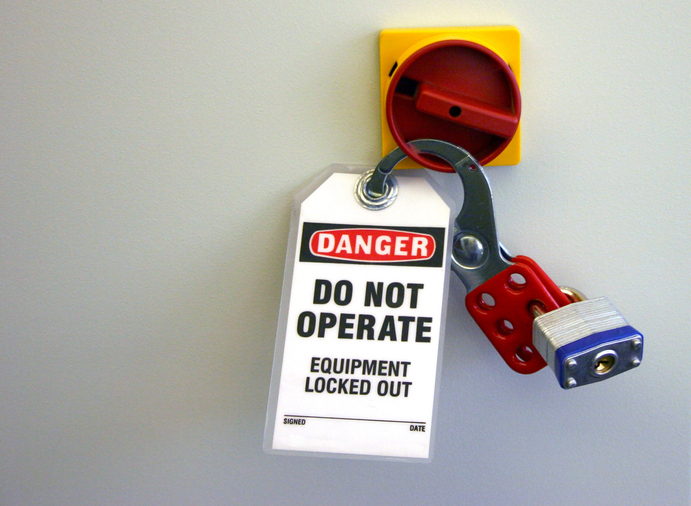
Example: A tag says: “Locked by: J. Rivera, Maintenance – Do Not Operate – 04/05” A sign says: “Danger: Equipment Under Maintenance. Perform Lockout Before Servicing.”
Both are necessary. Tags for traceability. Signs for awareness.
Where to Place Lockout Tagout Signs for Maximum Impact
Location determines effectiveness. A sign hidden behind a control panel does nothing.
Follow these placement rules:
1. At Primary Energy Isolation Points Place signs next to disconnects, circuit breakers, valve handles, or pull stations. Workers should see the warning before they touch the control.
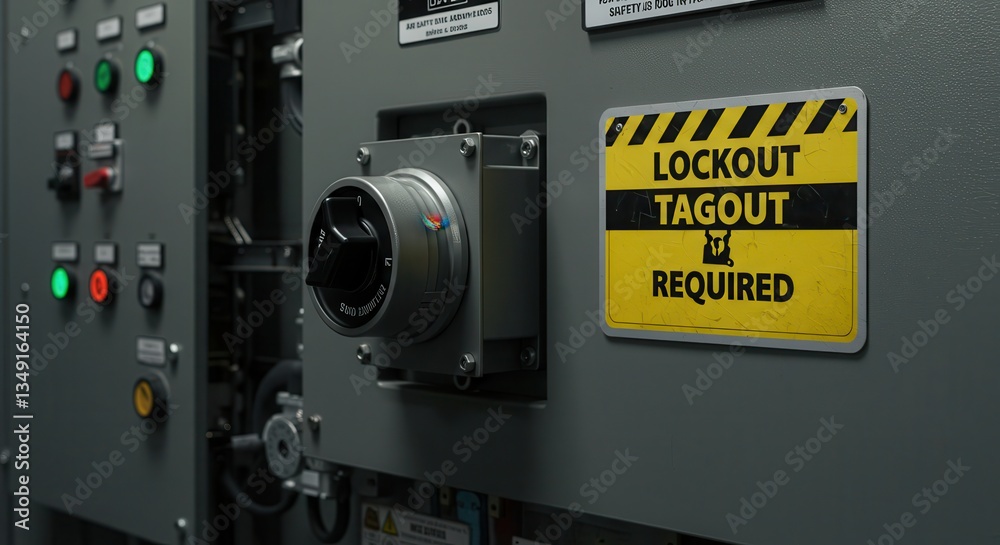
Example: A red “Danger – Lockout Required” sign mounted directly on a motor starter panel.
2. Near High-Risk Machinery Machines with multiple energy sources (electrical, hydraulic, pneumatic) need prominent signage. Think presses, mixers, conveyor systems.

Use case: A printing press with live rollers and high-pressure air lines displays a laminated LOTO procedure sign with pictograms.
3. At Zone Entry Points If maintenance is happening in a section, post signs at entrances. This prevents accidental re-energizing by other teams.
Best practice: Use illuminated or reflective signs in low-light areas like basements or utility tunnels.
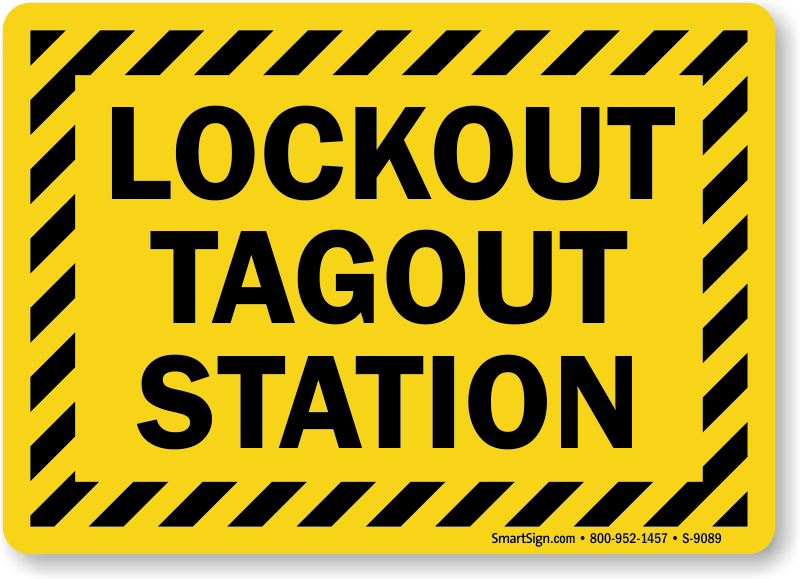
4. Beside Lockout Stations
Many plants have centralized lockout boards or cabinets. Surround them with instructional signs: - “Authorized Personnel Only” - “Return Lock After Use” - “Verify All Locks Removed Before Restart”
This reduces procedural drift.
Design Standards for Effective Lockout Tagout Signs
Not all signs are created equal. An ineffective sign blends into the background. A good one demands attention.
Use OSHA-Compliant Signal Words
- DANGER – Immediate hazard, risk of death or serious injury
- WARNING – Potential hazard, less severe but still risky
- CAUTION – Minor injury potential
For LOTO, “DANGER” is typically correct.
Include Clear, Action-Oriented Language Avoid vague phrases like “Be Careful.” Instead:
- “Do Not Start, Energize, or Operate”
- “Lockout Required Before Opening”
- “One Person, One Lock, One Key”
Combine Text with Pictograms OSHA encourages visual aids. A symbol of a padlock over a switch transcends language barriers.
Choose the Right Materials
- Indoor: Vinyl or laminated paper
- Outdoor/Industrial: Aluminum, rigid plastic, or photoluminescent
- Harsh environments: Chemical-resistant, UV-stable materials
Mismatched materials lead to faded, peeling signs—signs that erode trust in the entire LOTO system.
Common Mistakes That Undermine LOTO Sign Effectiveness
Even well-intentioned programs fail when execution lags. Watch for these red flags:
1. Using Generic, Off-the-Shelf Signs A “Danger – Do Not Operate” sign from an office supply store lacks context. Tailor signs to the equipment and process.
Fix: Create custom signs with machine names, lockout steps, or QR codes linking to LOTO procedures.
2. Poor Visibility or Placement Signs behind doors, facing walls, or covered in grease won’t stop anyone.
Fix: Conduct walk-throughs during shift changes. See what workers actually see.
3. Ignoring Multilingual Workforces If 40% of your team speaks Spanish, your signs should too.
Fix: Use bilingual signs or symbols. Test comprehension with spot checks.
4. Failing to Update Signs Outdated signs erode credibility. A sign referencing a decommissioned machine signals neglect.
Fix: Audit signage quarterly during LOTO inspections.
5. Treating Signs as Decoration
When signs are everywhere—and ignored—they become invisible.
Fix: Reduce sign clutter. Use signs only where they add value.
Real-World Use Cases: Signs That Actually Prevent Accidents
Case 1: Chemical Plant Prevents Re-Energizing At a Midwest processing facility, a technician was repairing a pump handling caustic fluid. A “DANGER – LOCKOUT IN PROGRESS” sign was placed at the local disconnect and the central control room.
A second operator, unaware of the maintenance, attempted to restart the pump remotely. The sign stopped him. Investigation revealed a miscommunication—no LOTO procedure had been logged. The sign prompted verification, preventing a potential chemical release.
Case 2: Food Processing Line Avoids Crush Injury In a meatpacking plant, a conveyor required chain adjustment. The maintenance team applied locks and posted a sign with a QR code linking to the LOTO checklist.
Later, a supervisor scanned the code to confirm completion before clearance. The digital log showed one lock still applied—worker still inside. Restart was delayed. Injury avoided.
Case 3: Hospital Boiler Room Compliance A facility engineer noticed recurring lock removals on a steam valve. Investigation revealed no clear signage. After installing a bold “LOCKOUT REQUIRED – HIGH PRESSURE STEAM” sign with pictograms, unauthorized access dropped to zero.
These aren’t edge cases. They reflect daily risks in thousands of workplaces.
Integrating LOTO Signs into Your Safety Workflow
Signs don’t work in isolation. They’re part of a chain:
- Pre-Shutdown Meeting – Review LOTO procedure, assign responsibility
- Notification – Alert affected workers
- Shut Down – Stop equipment using normal controls
- Isolation – Disconnect energy sources
- Lock & Tag – Apply locks and personal tags
- Verify Isolation – Test for zero energy
- Post Signs – Reinforce status at key points
- Maintenance – Perform work
- Clear & Restart – Remove locks, verify area is clear, restart
Signs appear in steps 7 and 2—but their influence spans the entire process.
Pro Tips:
- Use temporary magnetic or adhesive signs during short-term work
- Train new hires to read signs first, before touching equipment
- Include sign condition in 5S audits
Choosing the Right Lockout Tagout Signage System
Not all facilities need the same approach. Match your signage to your risk profile.
Here are five proven options:
| Product | Best For | Key Feature |
|---|---|---|
| Brady BMP61 MetalSafe Signs | Harsh environments | Durable aluminum, UV-resistant |
| Seton LOTO Instructional Posters | Training reinforcement | Step-by-step visuals |
| Grainger Custom Lockout Signs | High-risk, unique equipment | Tailored text and symbols |
| Justrite Magnetic LOTO Signs | Temporary work zones | Removable, repositionable |
| National Safety Industries Glow-in-the-Dark Tags | Low-light areas | Photoluminescent for visibility |
For best results, mix permanent and temporary signage. Use durable signs for fixed hazards, and portable ones for dynamic maintenance.
Final Advice: Treat Signs as Active Safety Tools
Lockout tagout signs are not compliance decor. They are active safety instruments—part of a living system.
To get real value: - Design them for comprehension, not just regulation - Place them where decisions are made - Audit them like you audit procedures - Update them when processes change
A single sign won’t stop every accident. But a culture that respects signage—where every worker reads before acting—is one where LOTO works as intended.
Start today. Walk your floor. Find one faded sign. Replace it. Then do it again. Safety isn’t built in moments—it’s maintained in details.
Frequently Asked Questions
What color should lockout tagout signs be? Danger signs should use red, black, and white. Red dominates for immediate hazard recognition.
Do lockout signs need to include names? No—names go on personal tags. Signs provide general warnings, not individual accountability.
Can digital signs replace physical ones? Only if they’re reliable and always visible. Physical signs are preferred for critical warnings.
Are lockout signs required by OSHA? Yes, under 1910.147(c)(6), employers must use tags or signs to identify locked-out equipment.
How often should LOTO signs be inspected? At least annually, or during periodic LOTO procedure audits. Replace damaged or faded signs immediately.
Can a sign alone fulfill LOTO requirements? No. Signs support—but don’t replace—locks, tags, and procedures.
Should LOTO signs be bilingual? If your workforce uses multiple languages, yes. Clarity trumps compliance checkboxing.
FAQ
What should you look for in Lockout Tagout Signs: Why They Matter and How to Use Them? Focus on relevance, practical value, and how well the solution matches real user intent.
Is Lockout Tagout Signs: Why They Matter and How to Use Them suitable for beginners? That depends on the workflow, but a clear step-by-step approach usually makes it easier to start.
How do you compare options around Lockout Tagout Signs: Why They Matter and How to Use Them? Compare features, trust signals, limitations, pricing, and ease of implementation.
What mistakes should you avoid? Avoid generic choices, weak validation, and decisions based only on marketing claims.
What is the next best step? Shortlist the most relevant options, validate them quickly, and refine from real-world results.